
Popular diving planers like the Luhr Jensen Dipsy Divers have accounted for countless fish over the years. These divers are designed to have the main line attached to the tow arm on the diver and a leader to the lure attached at the back of the diver. The leader is approximately the length of the rod being used. This makes it easier to land a struggling fish once the diver has been reeled up to within a few inches of the rod tip.
This common setup works, but in clear water environments having the diver so close to the lure can create a spooking factor. To solve this problem, a growing number of anglers are rigging their diving planers using an Off Shore Tackle line release to the tow arm of the diver and fishing the diver like an in-line Snap Weight.
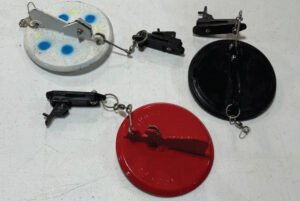 The release used depends on the type of line being fished with the diving planer. When monofilament, fluorocarbon or co-polymer lines are being used, the OR16 Pro Clip is an excellent choice. When braided lines are being used, the OR18 Snapper is the ideal release choice. Anglers who use wire line on their divers can also use the OR18 Snapper, but the release should be attached to the fluorocarbon leader, not the wire line. Clipping a release to wire line can damage the wire.
To get started with the in-line rigging method, the rod and reel used for fishing divers must first have a 25 to 50 foot leader of fluorocarbon line added. A double Uni knot is a good option for attaching a super braid to the fluorocarbon leader material. If stranded wire is being used on the diver, an Albright knot is a good choice for attaching stranded wire to the fluorocarbon leader material. (YouTube offers many videos on how to tie the Uni and Albright knots).
Once the leader has been rigged on the diver rod setup, let the desired lure and leader material out until the monofilament, braided or wire line reaches the rod tip. Place the diver on the line using the proper release type for the line being used. Lower the diver into the water, place the rod in a conveniently placed rod holder and back off on the reel drag until the resistance of the diver starts to slowly play line off the reel. When the diver has been deployed to the desired distance, tighten the reel drag enough to prevent further line from playing out.
This simple but effective means of rigging a diving planer as an in-line weight works flawlessly. When a fish is hooked, the diver will pop leaving the diver dangling on the line. This makes it much easier to reel in hooked fish.
Once the diver is within reach of the rod tip, the diver is removed, and the angler continues to fight the fish to net. This in-line rigging method is slick, easy, effective and it helps anglers catch more and bigger fish using diving planers.